Self-tanning has evolved from a niche beauty practice into a mainstream skincare ritual. As consumers become increasingly aware of the long-term effects of UV exposure, including premature aging, hyperpigmentation, and skin cancer, many are actively seeking alternatives that deliver radiant skin without compromising skin health. Self-tanning offers a solution that aligns with modern priorities of confidence, safety, and control.
This behavioral shift is reflected in usage data. Today, approximately 25% of U.S. adults use self-tanning products, up from 19% in 2022. This growth signals a fundamental change in how consumers define healthy-looking skin. A tan is no longer about sun exposure. It is about even tone and feeling confident in one’s skin.
Advancements in self-tanning formulations and the expansion of professional spray-tanning services have made tanning more accessible and customizable than ever. At the same time, the rise of the skin confidence movement has reframed tanning as part of a broader self-care routine rather than a purely cosmetic indulgence.
However, despite widespread adoption, one issue continues to limit satisfaction and repeat use. One of the most common complaints among self-tanners remains the same: the smell.
Key Takeaways
- Post-tan odor is the result of chemistry—not hygiene, product quality, or fragrance preference.
- Self-tanning can temporarily disrupt the skin’s natural balance, including its pH, which can make odor more noticeable.
- A pH-balancing body wash helps support the skin’s natural pH and can help address odor at the source instead of masking it.
The Science Behind Post-Tan Odor
The unmistakable odor that develops after self-tanning is not a matter of hygiene, product quality, or fragrance preference. It is the result of chemistry.
The active ingredient responsible for sunless color is dihydroxyacetone (DHA). DHA reacts with amino acids in the outermost layer of the skin through a process called the Maillard reaction. This reaction produces melanoidins—the compounds that give skin its tanned appearance. This is well documented and widely used in self-tanning formulations because it delivers color without UV exposure.
This process can temporarily disrupt the skin’s natural balance, including its pH.
DHA and Skin pH Balance
Healthy skin maintains a slightly acidic pH, typically between 4.5 and 5.5. This balance keeps skin comfortable, hydrated, and functioning properly. When pH shifts, the skin can become more sensitive, and odor can become more noticeable.
During self-tanning, DHA reacts with amino acids to create color, but this process can temporarily move the skin out of its ideal pH range. This imbalance is why the familiar post-tan smell can develop and linger. In short, self-tanning delivers color, but it can leave the skin out of balance. Restoring that balance helps address odor at the source.
Why Fragrance Is Not Enough
Many self-tanning and body care products try to address this issue with fragrance. While fragrance may temporarily mask odor, it does not address the underlying cause. Heavily scented products can even exacerbate irritation on skin already chemically stressed.
Traditional body washes are formulated to cleanse, not rebalance. Some are overly alkaline. Others contain surfactants that further disrupt the skin barrier. Dermatological insights suggest that using harsh or improperly balanced cleansers after self-tanning can prolong odor development and accelerate moisture loss without solving the core issue.
The result is a cycle many consumers recognize: the tan looks great, the skin feels clean, but the odor returns shortly after showering.
The Role of a pH-Balancing Body Wash
A pH-balancing body wash is designed to help support the skin’s natural pH after it has been disrupted by DHA. Rather than stripping the skin or covering odor with fragrance, it works at the source, normalizing conditions that contribute to odor formation.
By addressing imbalance at the source, a pH-balanced formula can help neutralize post-tan odor instead of masking it. It can help support barrier function and hydration, reduce irritation and dryness, and help preserve the appearance of the tan, since overly harsh cleansers can accelerate fading.
Research shows that when pH is properly balanced, skin functions more efficiently in both appearance and comfort.
Meeting the Expectations of a Growing Market
As self-tanning grows in popularity, consumer expectations have shifted. People are no longer willing to accept discomfort as part of the process. They want results that look good, feel good, and integrate seamlessly into daily life.
The data is clear: self-tanning delivers confidence and visible results, but odor remains a major barrier to continued use. Addressing this issue is no longer optional. It is essential for anyone serious about modern tanning care.
A pH-balancing body wash fills a critical gap in the self-tanning routine by addressing a problem long considered unavoidable. With the right formulation, it’s possible to enjoy bronzed, radiant skin without the lingering reminder of how it was achieved.
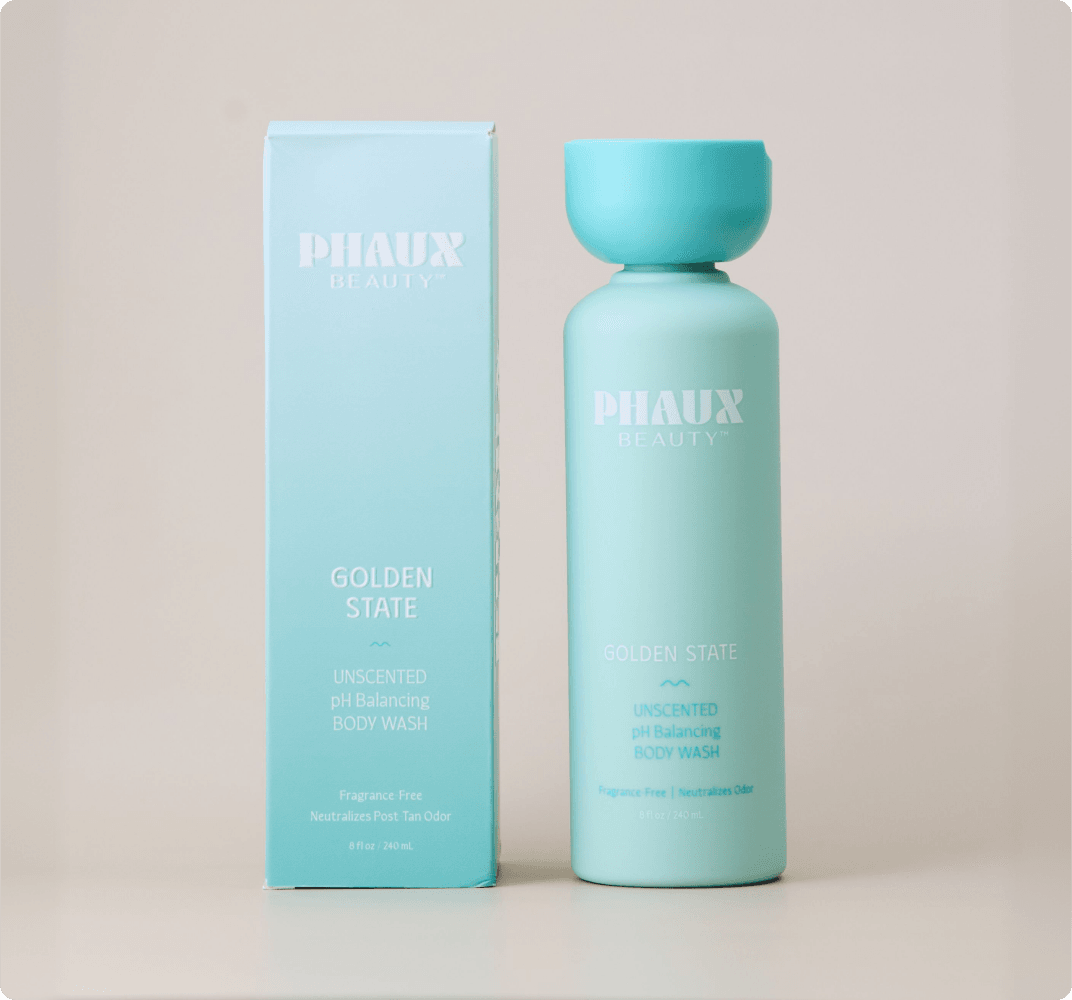
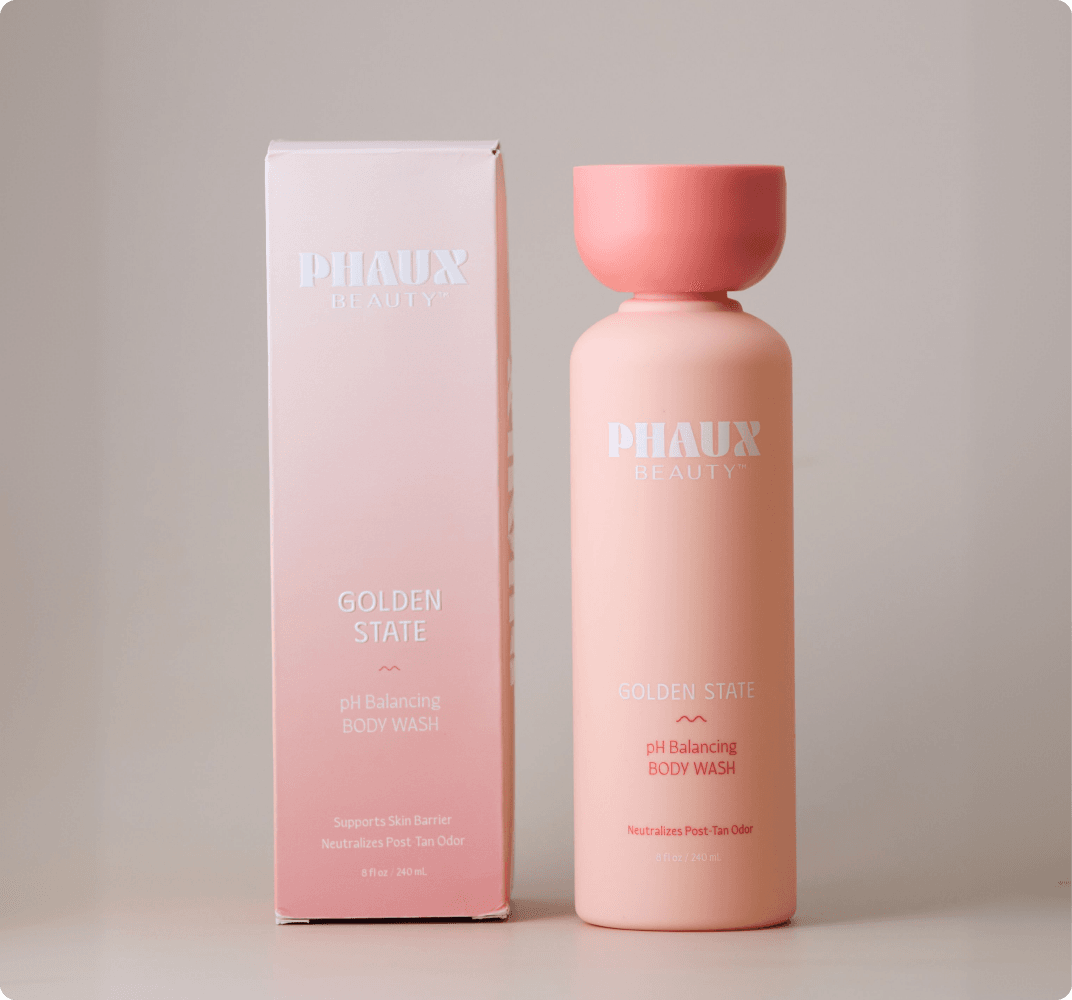
Post-tan odor isn’t something you have to mask — it’s something you can address at the source by supporting the skin’s natural pH. That’s why we created Phaux: a pH-supporting body wash made specifically for self-tanners, with an unscented option for sensitive skin.